Trianco’s Activair R290 Indoor Heat Pump – The Perfect Energy-efficient Solution for Apartments and Smaller Homes
24 Jul 2026


With the Future Homes Standard approaching, architects are playing a far more strategic role in how residential developments generate and distribute heat. Rather than simply accommodating mechanical systems within a finished design, architects are increasingly influencing how heat and hot water infrastructure is conceived at a planning level.

Heat networks represent a different way of thinking about building energy. They provide a shared infrastructure that distributes heat across an entire development. For architectural practices involved in new housing and mixed-use schemes, understanding how these systems interact with spatial planning and long-term building performance is becoming increasingly important.
At Power On, we are seeing this transition unfold across projects of varying size and complexity. As heat networks move from policy discussion to practical implementation, early design decisions are proving critical in shaping carbon outcomes, operational resilience and long-term occupant satisfaction.
As the UK progresses towards its net-zero target for 2050, these networks are expected to replace many traditional gas-based heating systems, particularly in higher-density developments.
For architects, the design implications are considerable. Heat networks reward early, coordinated design thinking. Decisions relating to site layout, density, building orientation and construction phasing can all influence network efficiency, heat distribution losses and future adaptability.
Developments that are masterplanned with energy distribution in mind tend to perform far more effectively than those where a heat network is introduced late in the design process.
This is why close collaboration between architects, engineers and heat network providers is becoming increasingly essential.
One of the most important architectural considerations in a heat network scheme is the placement of the energy centre or heat hub. This is even more crucial in the case of high-rise developments, where equipment can generally only be placed in the basement, on the roof, or in an adjoining purpose-built building.
Its location affects servicing access and the placement of pipe runs to the dwellings. Allocating space for plant equipment and distribution systems at an early stage is therefore not simply a technical requirement; it is fundamental to the design of the rest of the building. One of the major benefits of networked heat is that it does not require individual solutions, such as individual air source heat pumps, on each dwelling – particularly relevant in high-rise, high-density developments.
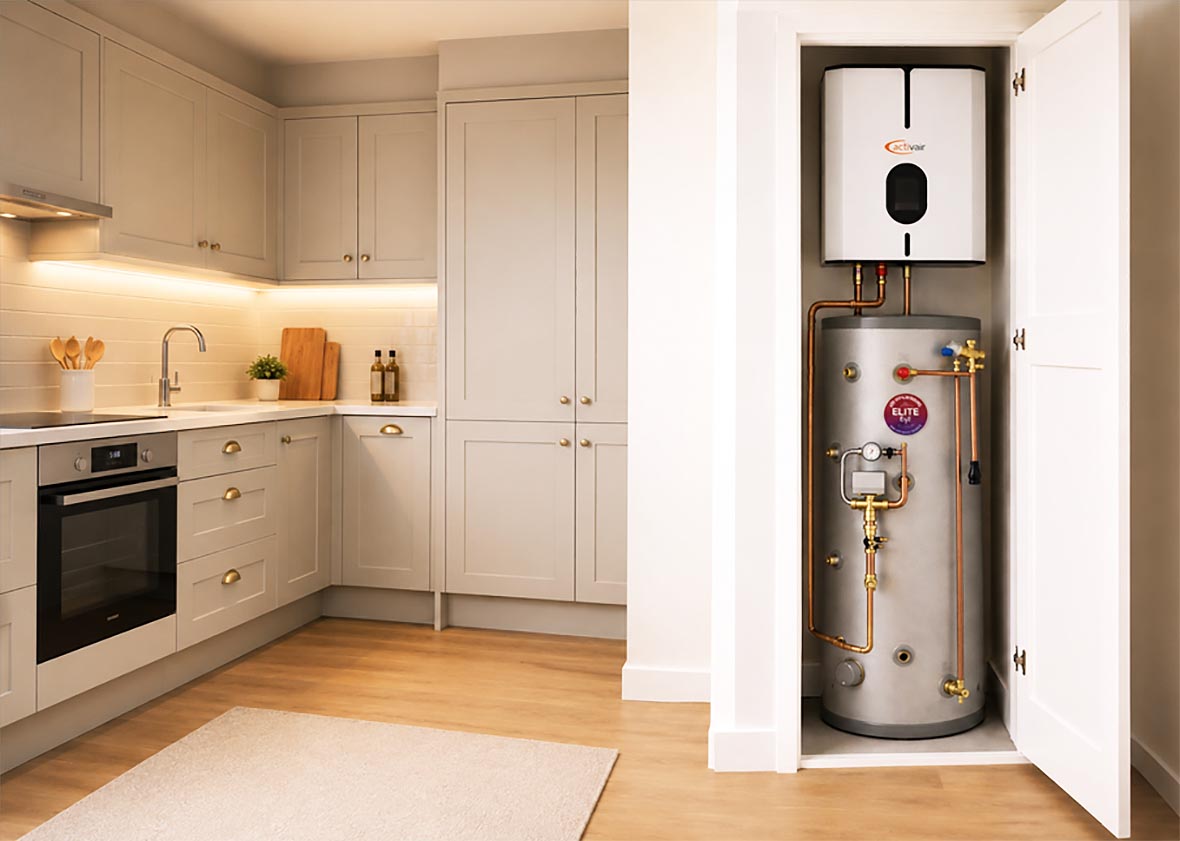
Within individual dwellings spatial considerations should be made easier as each property requires only a small heat interface unit (HIU), which replaces a much larger traditional gas boiler.
Integrating HIUs into utility cupboards or designated service zones helps ensure straightforward installation, easier maintenance access and a better day-to-day experience for residents.
Successful heat networks rarely emerge from isolated decision-making. Instead, they rely on a collaborative design process involving architects, building services engineers, planners and energy providers.
Factors such as heat demand modelling, pipe sizing, system zoning and load diversity all influence network performance. Architects who understand these principles are better positioned to align design intent with engineering performance.
This integrated approach also supports future flexibility within developments. Heat networks designed with scalability in mind can accommodate additional buildings, future development phases or new low-carbon heat sources as technologies evolve.
From an operational perspective, this adaptability often determines whether a network simply meets regulatory requirements or performs reliably over several decades.
While heat networks are often discussed in terms of carbon reduction and energy efficiency, their long-term success ultimately depends on the experience of the people who live with them.
Clear controls, transparent metering and consistent heating performance shape how residents perceive low-carbon energy systems in their homes.
Architects influence this experience through layout decisions, specification choices and the integration of user controls within living spaces.
At a regulatory level, developments must also meet requirements set out in Part L of the Building Regulations. Organisations such as Power On increasingly work with project teams to look beyond basic compliance, using heat networks to support resilient, future-ready developments that align environmental policy with everyday usability.
In some cases, these systems can also contribute to overheating mitigation strategies, supporting compliance with Part O of the Building Regulations through passive cooling capabilities.
As heat networks become a more common feature of the UK’s residential development landscape, architects are being encouraged to think more holistically about energy infrastructure.
Rather than viewing heating as a secondary technical layer, it is increasingly becoming an integral part of site planning, spatial organisation and long-term building stewardship.
When considered early and designed collaboratively, heat networks can deliver more than lower carbon emissions. They can help shape developments that are efficient, adaptable and resilient for decades to come.