
The UK needs to build more houses and, with construction rates falling below housing needs for the last decade, it needs to build them fast.
There has been a particular shortfall in affordable homes, so that’s one area where construction needs to especially focus on. New homes also need to be energy efficient in use, and low carbon in construction, as government regulation of the sector is increasingly shaped by net zero emissions targets. All of which show timber frame construction can increasingly play a significant role in the UK’s house building approach.
That view is clearly shared by the country’s housing construction giants, judging by developments this year. Barratt has announced construction of a new £45 million timber frame factory, which it says will help it meet the government’s new energy efficiency, low waste-focused Future Homes Standard (FHS). Taylor Wimpey is investing in a fully automated new timber frame plant, while Persimmon has recently secured planning permission for a new facility for its Space4 timber frame division, which will be the largest of its kind in the UK.
The UK government is also starting to put its faith in timber-based building. Announced in 2023, and updated in 2025, the ‘Timber in construction roadmap’, has a dual focus; how to increase domestic timber production and underpin that by growing the timber building sector to use the wood. It sees the benefits of achieving these goals as environmental, economic and social. It notes that, while timber frame construction is the prime approach in Scotland, it is still relatively underdeveloped in comparison to other countries in the UK.
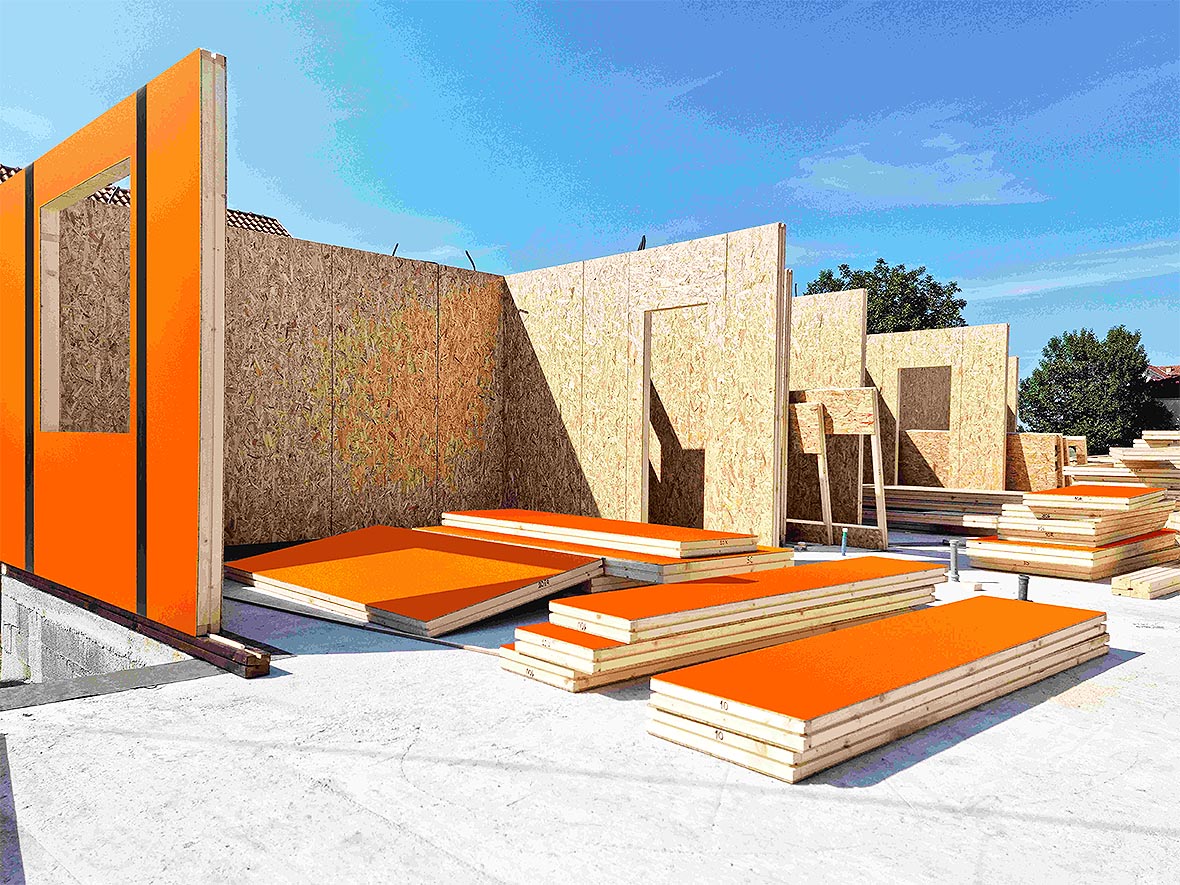
Timber frame construction is seen as an alternative to vapour control membranes such as plastic based housewraps. Unlike housewraps that are manually fixed on building sites or in the factory requiring specialist skills, thermally fused weather resistant overlay based timber panel products can be manufactured offsite in their entirety. This offsite manufacturing process results in uniform vapour control and water protection across the timber frame panel, and a more efficient timber frame build process designed to further raise the quality and performance of timber frame housing.
The drive to timber building is clearly given added impetus by increasing government and consequent industry focus on sustainability. Construction is estimated to account for around 40% of man-made emissions globally, So decarbonising the sector is core to UK government net zero strategies – hence the revision of building regulations within the FHS. And timber frame is acknowledged as a prime low carbon build solution. Timber absorbs CO2 while growing and stores it for life. Timber frame panels also deliver high levels of insulation, while wood itself is a natural insulant.
The other way forward for construction, given its capacity to deliver quality, affordable and sustainable homes rapidly and efficiently, is increasingly seen as offsite modern methods of construction. And, given its strength to weight and ease of processing, timber is seen as an ideal material for offsite building manufacture – evidence of which is this latest wave of new offsite timber frame factories announced by the house building majors.
The government is getting behind this form of construction too, setting up the £10 billion offsite framework to support growth. The picture today, as a result of developments in recent years, is that around 25% of new UK homes are timber frame, while the figure is around 90% in Scotland, where the combination of Scottish weather and timber frame’s speed of build adds to its appeal. An MTW report sees a ‘real possibility’ of the UK’s annual timber frame market hitting £1 billion.
The one vulnerability of wood in construction is moisture, which can compromise technical performance. Timber-based panels used in open and closed panel timber-based construction naturally need moisture protection during construction. They also need a permeable vapour-control layer to let humidity escape the building envelope and prevent interstitial condensation.
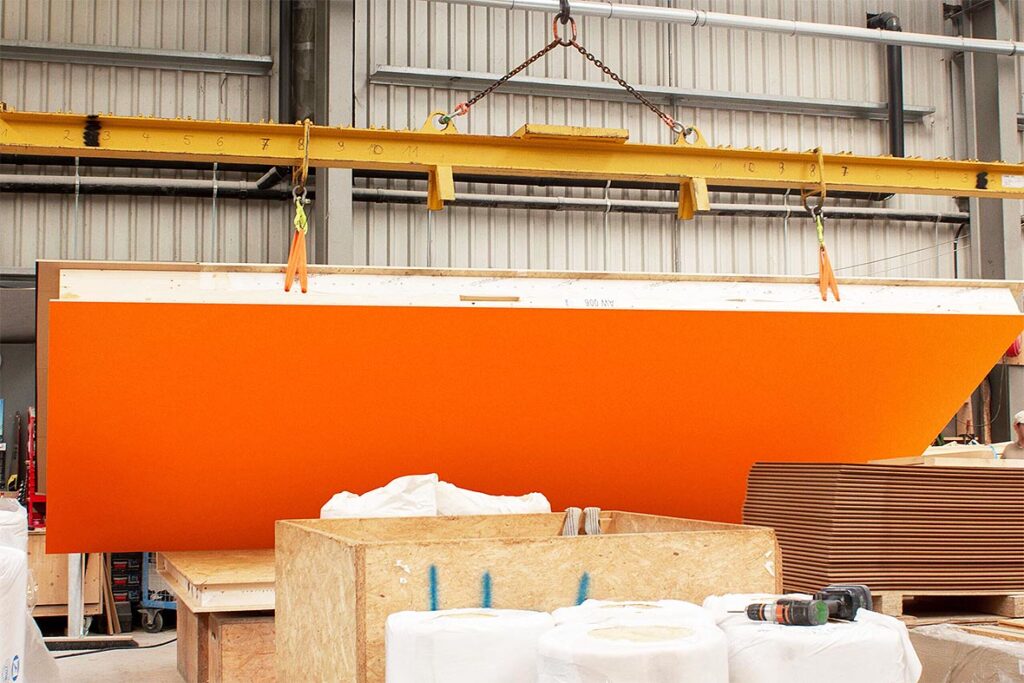
Thermally fused weather resistant overlays are based on a technology that’s long-established and extensively used in America and delivers both. They’re a vapour permeable, water-resistant material which is thermally fused to timber-based panels and being factory-applied means the process is completed in a climate and quality-controlled environment.
Arctek® Dryshell™ overlay panels, for example, have vapour control and moisture protection in place and help achieve a weathertight building shell faster than is possible with site-applied membranes. They improve building airtightness too and it is also ideally suited to offsite, modern methods of construction, it accentuates their benefits in terms of quality control and rapid timber frame panel fabrication.
To find out more about how offsite, thermally infused, weather resistant products can help achieve a weathertight building shell and benefit your timber frame projects contact Arclin to seek their expert advice or to request a sample.